Millikan Movie
Update Sept 19:
The total movie archive is complete.
Just for convenience:
Exp1: E-W shaking with full weights
Exp2: N-S shaking with full weights
Exp3: N-S shaking with 2x2 weights
Exp4: E-W shaking with 2x2 weights
Exp5: E-W shaking with no weights
Exp6: N-S shaking with no weights
Update Sept 17: I have almost completed the N-S movie archive, which can be found here, https://casefive.net/boogie. This is simply plots of the raw data, looking at the N-S records from the east and west sides of the library. We were missing two records from the N-S component on the east side, so I have linearly interpolated for floors 2 and 8. This introduces small error for some modes, but is probably introducing larger error for higher modes with more curving in the mode shape.
My naming convention:
.tra. leaves a trace, not used much
.opt. is web optimized, a simple dancing stick
.nx2. is both north components on the same plot, envelope
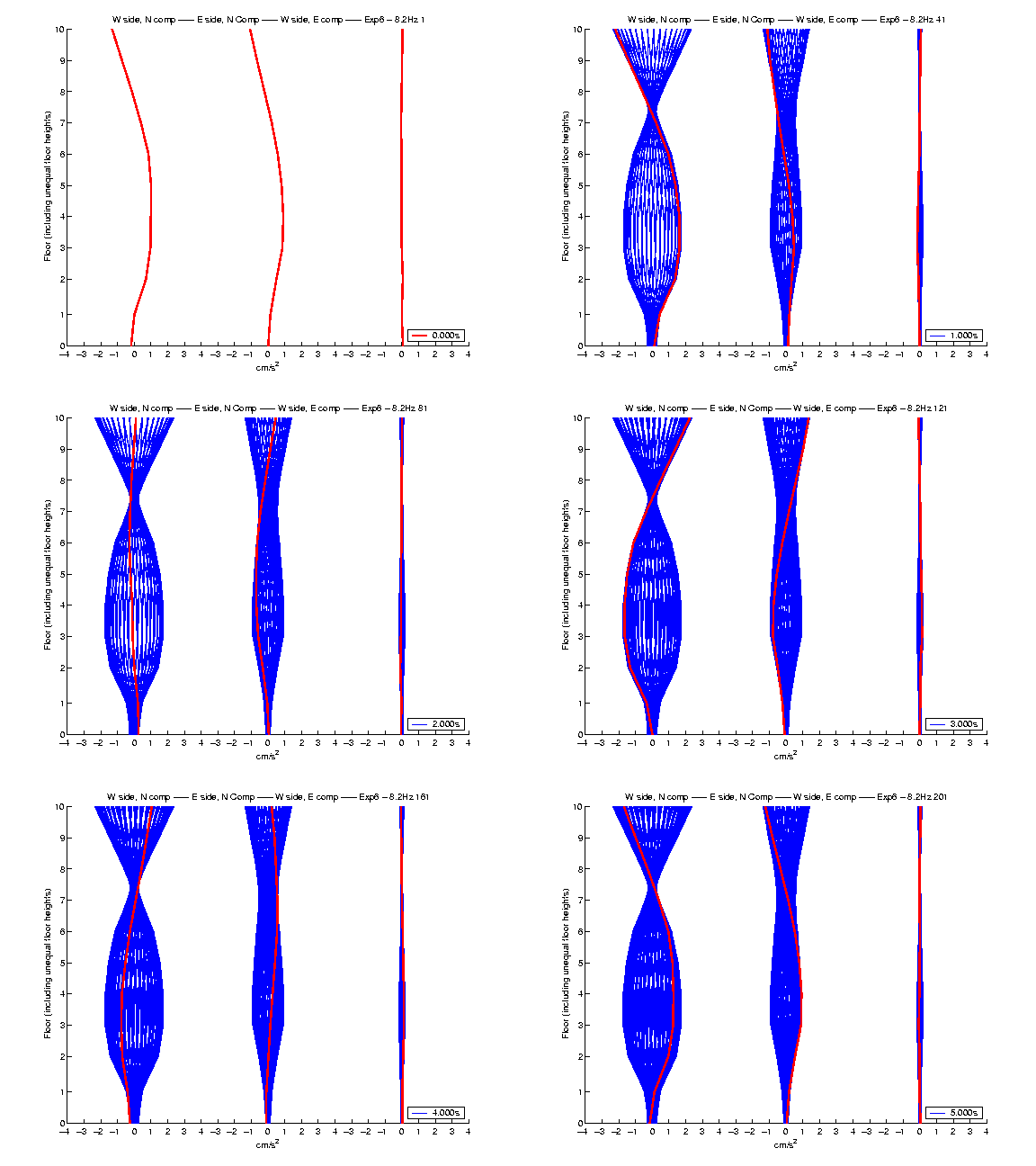
.nne. is north-north-east components, all 3 on the same plot with envelope
.env. is envelope plots
.tlt. is a new thing I've been working on to make movies with tilt removed, I don't trust it yet...
The corresponding E-W movies are still in www.ecf.caltech.edu/~case/dance. I have not completed the entire archive, since I have decided that the best way to look at the movies is probably all 3 on the same plot. For those, I am working on filling out the total archive at www.ecf.caltech.edu/~case/total. These contain the north records from the east and west sides, and the east records, all on the same scale. All data is at 40sps, and I have not normalized for mass/frequency. As an example:
John 's webpage is here, he has some force normalized still images that show the peak response and mode shapes.
Update Sept 9 (small change Sept 10):I have been looking at different upgrades to the basic 'dancing stick' images. First:
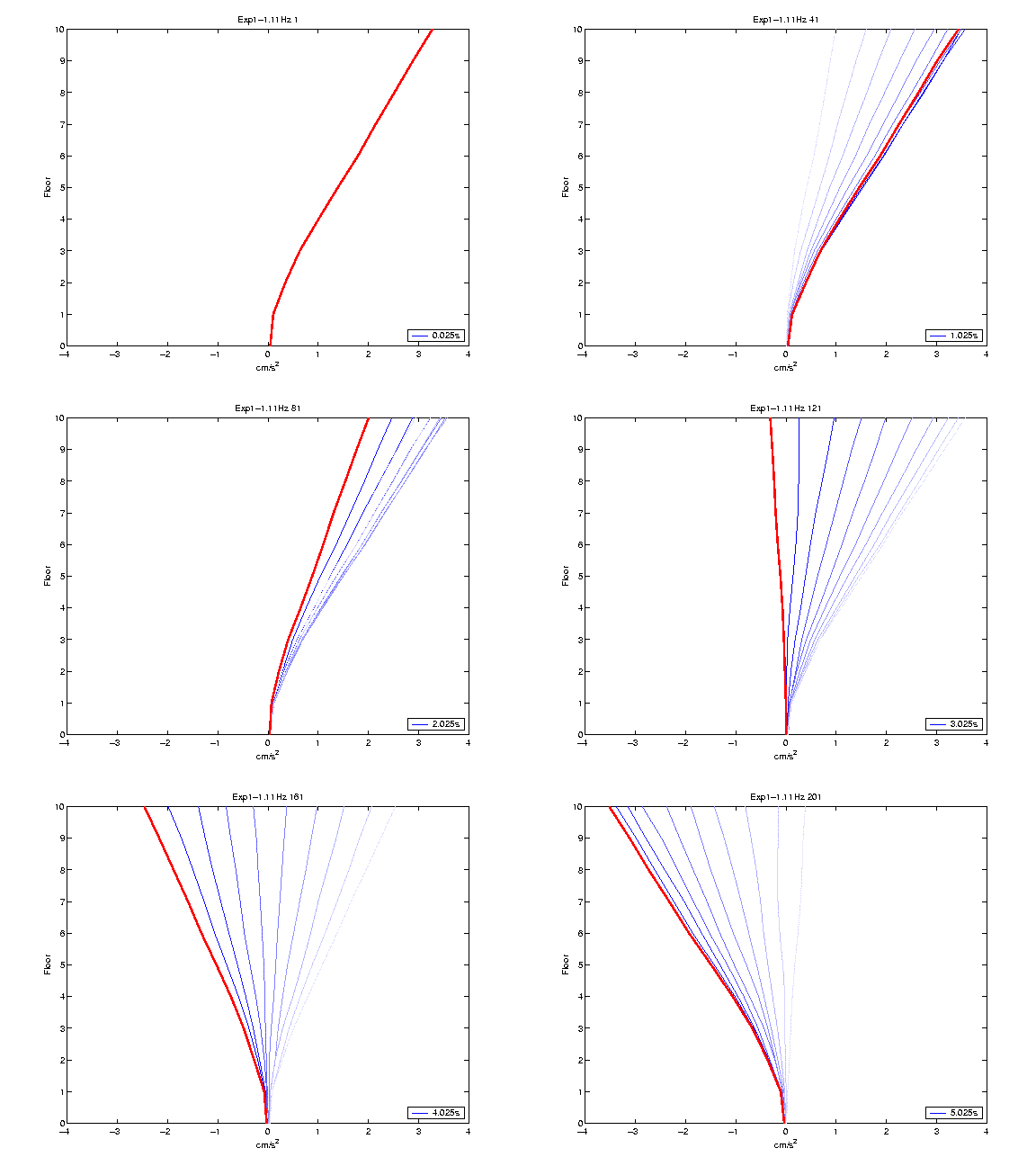 This is just a neat visual trace to help see how the building behaves. It doesn't really carry more useful information than the old dancing stick, but it looks nicer. The next one is a little more useful, it keeps all the lines on the image tracing out an envelope of the building motions:
I have pulled some of the old movies off of the page, as they have started to make this page load too slowly. The links should still
function if you feel the need to look at some of my earlier tries at animation...
dance/exp5-4.93Hz.env.gif
I think this is the best one for now, in that you get a clear feel for how the building is bouncing. John is working on ways to take out the tilt and translation, we will be combining our efforts for some new plots soon. See here for some more E-W movies. The naming convention is pretty straightforward, anything with .tra. is of the kind that leaves a trace, anything with .opt. is optimized for web viewing, anything with .env. is of the envelope type, and .tlt. is a new way of showing tilt in movies (Sept 10). There's only one so far, I am not sure I trust my method. For higher frequencies these movies get a little coarse, I will be creating some clearer movies with 200sps data for some of these files.
OLD STUFF:This is the newest of my toys (Sept 3): The title has a frame count, the bottom corner has a seconds counter ticking away, you can see this is about 3 seconds of E-W shaking at the fundamental mode. (40sps data, decimated from 200sps records)
madeit2.gif
I created this using a different method, I am no longer creating a .mpg file, I am instead writing each frame as an image file (.pcx) then converting the image to .gif format and creating an animated gif file. This takes much less time.
Old Stuff:
I made a .mpg movie of the E-W Millikan data. I took the data, cut it
for a few seconds during the peak response during our test, and created a
movie file with values every tenth of a second. E-W
fundamental mode test.
These are the E-W stations through the
height of the building.
One thing that I haven't done is fully normalize the data. I did a
rough pass to test my method but this movie is just a plot of the data
minus the mean of the data for the time period. It looks a little odd,
some of the floors seem like they're moving much more than expected.
The
data all has the same gain level, so I'm a little stumped.
But anyway,
I will be getting similar plots for all the modes we tested, and getting a
summary together soon.
New, here is an animated .gif file of the same movie. I have slowed down the frame count, but I can make the delay between frames as long or short as I want. I am using Matlab to create a movie variable, then exporting it to .mpg format using mpgwrite (an add-on function of Matlab), then using an image converter named ImageMagick to make an animated .gif file out of the .mpg file. I then edit the framespeed of the animated .gif file using gifsicle.
ooot.gif
Samuel Case Bradford V
Last modified: Fri Sep 20 11:53:06 PDT 2002